


Hiring used to feel like a long, manual grind—resumes stacked, emails lost, decisions delayed. That version of HR is fading. Quietly, almost unevenly, automation has stepped in and changed the rhythm. Not perfectly. Not all at once. But enough to matter. Companies now filter candidates faster, track skills better, and reduce guesswork in hiring. Still, it’s not just speed; it’s structure. A different way of thinking about talent. Less reactive, more mapped.
In this blog, we look at how HR automation reshapes talent management, what it fixes, where it struggles, and why smarter hiring now depends on it.
HR automation in talent management isn’t just about tools—it's about removing friction. The small delays. The missed candidates. The bias that slips in unnoticed.
Instead of manually sorting hundreds of resumes, systems now scan, rank, and shortlist. Not perfectly, but faster. Much faster. Recruiters get a clearer starting point.
Hiring used to start when a vacancy opened. Now it starts earlier. Systems track internal performance, skill gaps, and even attrition risks. That changes timing.
Here’s what companies really get from HR automation:
Of course, nothing’s perfect. The algorithms still need work. But the change is happening.
Also Read: AI Hiring Process 2025: Transforming Recruiting Strategies
HR automation benefits aren’t abstract anymore. They show up in daily work—faster replies, better tracking, and fewer missed steps. Yet, the impact isn’t evenly distributed. Some teams see huge gains. Others, smaller shifts.
Candidates notice delays. Silence. Confusion.
Automation fixes some of that:
It feels smoother. Not perfect, but less frustrating. Still, over-automation can feel robotic. That balance matters.
My gut feeling isn’t gone. But it’s challenged.
Recruiters now see:
It adds weight to decisions. Sometimes too much. Data can mislead if poorly set.
The shift isn’t limited to hiring. It spreads. Slowly, then suddenly. Automation touches almost every HR function—recruitment, onboarding, performance, and even engagement.
Applicant Tracking Systems (ATS) are everywhere now. They don’t just stash resumes—they pretty much run the show. They sift through applications, rank candidates by keyword and skill, and keep track of every email or call.
But there’s a downside. If you don’t have the “right” keywords in your resume, you might get missed, even if you’re perfect for the job.
Onboarding’s gotten a tech upgrade, too. Automation makes things smoother—new hires get their paperwork handled automatically, training schedules pop up on their calendars, and checklists show exactly what to do.
There’s less confusion, and everything’s consistent. Still, too much automation takes away that personal touch. Nobody wants to feel like they’re joining a robot army.
Suggested Reading: AI In Recruiting Coordinator Workflow That Simplifies Hiring
Human resource automation goes beyond hiring. It shapes how people move from onboarding to growth, all the way to exit interviews. Every phase—guided, not stiff.
For talent development, automation tracks who’s learning what, who has finished which certifications, and where their skill gaps are. HR can recommend training that actually makes sense. You can see real progress, not just random growth.
Retention and engagement don’t rely on exit interviews anymore. Automated systems pick up early warning signs—lower engagement scores, less participation, shifts in performance.
HR gets pinged sooner and can step in before things get bad. But those alerts aren’t always right. You need a human perspective to understand what’s really happening.
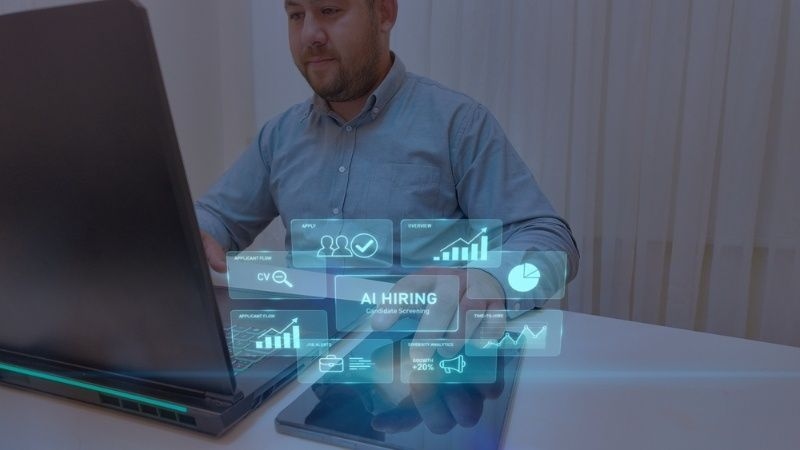
When it comes to hiring accuracy, automation tightens things up. Decisions get sharper because processes are more structured.
Structured interviews used to be all over the place—different questions, criteria, and feedback. Now, templates, scoring systems, and automated feedback help keep things level. It cuts down on randomness, but a good interviewer still makes a difference.
Candidate matching got smarter. Now, systems look beyond resumes. They check clusters of skills, how people behave, and what they've done before. The matches feel sharper, yet sometimes the system overlooks things like passion or the ability to adapt.
Even so, automation isn’t a cure-all. It solves some headaches, sure, but brings a few new ones along the way.
If HR relies too heavily on tech, people can lose their judgment. If something breaks or mislabels someone, nobody catches it right away. You need to remember—the tool guides, not decides.
Handling employee data comes with responsibility. Automation systems store sensitive information — resumes, performance records, and personal details.
Risks include:
Strong safeguards are essential.
Read More: Learn Strategic HR Planning for a Future-Ready Workforce
HR automation has changed hiring — not by replacing people, but by reshaping how decisions are made. It removes delays, sharpens data use, and creates more predictable systems. Still uneven though. Some companies get it right; others struggle with over-automation or poor implementation. The real value isn’t speed alone — it’s clarity. Better signals, cleaner processes, fewer blind spots.
But automation isn’t the endpoint. It’s a layer. The human side — judgment, empathy, intuition — still sits underneath everything. Ignore that, and systems fall flat. Use both together, and hiring becomes smarter, quieter, and more deliberate.
Organize, share, and collaborate effortlessly with GPTDrive—your AI-enhanced workspace that just works: https://gptdrive.com/
HR teams now need basic data understanding and system navigation skills, plus the ability to interpret analytics. Not deep technical knowledge, but enough to question outputs and avoid blind reliance on tools.
Honestly, the benefits are there, just different. In a small team, automation mostly saves time. Simple tools handle things like sorting resumes, booking interviews, and keeping track of candidates. They don’t need a big, fancy setup. Even basic automation cuts down on the busywork.
Basic software isn’t too hard on the wallet—most go for monthly fees. But if you want those high-powered, AI-driven platforms, expect to pay more. And don’t forget, the real expense isn’t just buying software. You pay for training, getting everything set up, and changing how people work.
Not exactly. The work changes—less routine stuff, more focus on real impact: strategy, relationships, big decisions. Automation steps in to help, but it doesn’t push anyone out.
This content was created by AI