


In today’s fast-paced business climate, all organizations—start-ups through enterprise-level —realize that human resources (HR) software is no longer a luxury but a requirement for effectively managing their employee-related activities, processing capabilities, and employee performance. The right HR software application can significantly change how an organization operates, whether you are evaluating HR software for a small business, comparing HR software providers, or looking for scalable, advanced HR software options for future growth.
Within the first few moments of reviewing an HR technology solution, decision-makers discover one essential point: the traditional method of manually performing all HR activities is not scalable. This is why modern organizations turn to the products of top-rated HR software providers to automate HR processes, reduce errors within those processes, and facilitate employee engagement, ultimately supporting ongoing organizational growth.
HR software, which provides core functions for managing human resources, such as recruitment, onboarding, payroll, benefits administration, compliance and performance management, is typically referred to as a digital solution. However, some of the best HR software systems available today have moved well beyond simple automation and become powerful tools for enabling human resource teams and business leaders to create and implement strategic programs.
In addition, today's HR software solutions enable organizations to collect, maintain, and manage employee data in a centralized database; enable organizations to easily comply with current labor laws and practices; and improve the overall experience of all employees.
With many employers focusing on growth, especially for small businesses using hr software systems, centralized systems allow employers to spend more time and effort on their employees, while reducing the number of mistakes that occur as a result of using disparate systems.
The advent of cloud-based HR software has made enterprise-level HR functionality available to companies at an affordable price point.
Human Resource Software has many advantages. The greatest advantage is that it will eliminate repetitive manual labour. It will automate all repetitive tasks related to payroll, leave tracking, and the management of confidential employee information. The HR software most effective for business operations will enable seamless integration with all accounting and project management systems.
Best HR Software Platforms enable a small organisation to operate as efficiently as its larger competitors by utilising the full capabilities of the software without incurring additional costs or complexity.
Discover More Insights: Learn Strategic HR Planning for a Future-Ready Workforce
While many small businesses think of Human Resource (HR) Technology as something that only large companies utilize, in fact, the most significant benefit of HR software for the small business is usually seen there.
Unique to Small Businesses: Because Small Businesses typically have fewer HR employees, are limited by less funding in their pursuit of HR technology, and must often grow quickly to keep pace with competitors, small businesses need to find HR solutions that offer affordable, scalable options.
HR Software for small businesses will give Business Owners greater ability to hire and onboard employees quickly and efficiently. Business Owners also have a greater ability to manage payroll and benefits correctly, maintain compliance, and keep accurate employee records.
Business Owners will have increased ability to communicate and engage with their employees.
This trend towards providing modular pricing models and a flexible feature set to accommodate the needs of Small Businesses has been embraced by the majority of leading HR Software Vendors.
When evaluating HR software, there are specific core features that will be a must-have when comparing options. The following features are present in most top-performing HR solutions:
Effective HRMS will have all employee information stored in a centralised database to ensure security, and data can be searched easily which reduces human error in addition to the accuracy of reporting.
Advanced HR systems will streamline the ways you can post jobs, screen applicants, and schedule interviews, saving you time and helping to increase the quality of your hiring.
Accurate payroll processing is critical. The top HR systems will ensure that payroll calculations, taxes, and timely payments are calculated accurately.
Modern HRM can facilitate continuous feedback with employees, track employee goals and performance reviews, and align employees with the organization's goals.
There are various varieties of HR systems. On one hand, there are HR Systems built specifically for large companies (enterprise). On the other hand, some HR Systems are actually industry-specific software or Small business-specific software.
R Software Companies have unique Features:
When determining which HR vendor to select, you should determine your current Business Needs and Future Growth plans). The best HR software vendors provide HR solutions that adapt as the Business grows.
The shift from traditional on-premise HR systems to cloud-based HR solutions has resulted in more access to up-to-date information as well as improved data protection and security without requiring additional resources and assets from the companies using them.
By providing a common platform for all employees regardless of the location (remote or hybrid), cloud HR Software allows HR personnel to access employee data and HR services anytime from anywhere via internet connectivity. As a result of this development trend towards developing their platforms primarily via Cloud Computing technology, numerous HR Software vendors are focusing exclusively on developing their products in relation to accommodating today's Modern Workforce.
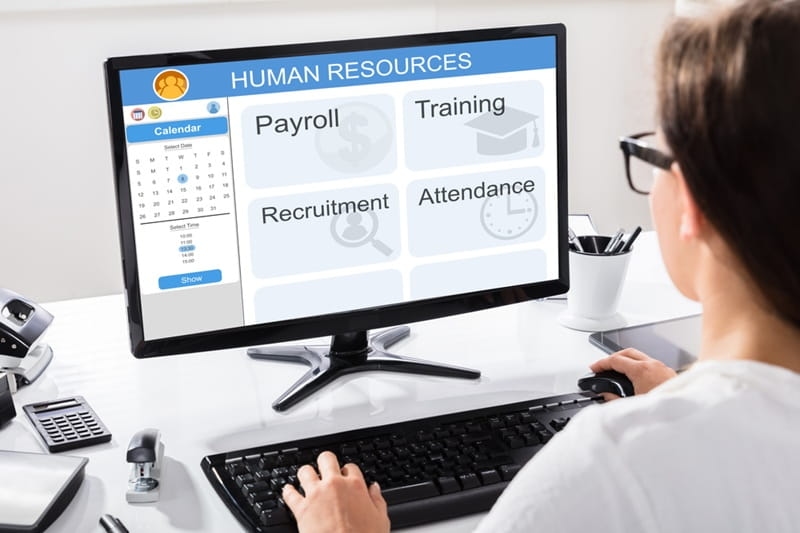
Staying compliant is one of the HR Team's most essential functions. Organisations can meet their labour, tax, and data protection requirements by using the Right Human Resources Software. Using an advanced human resources (HR) software solution means compliance updates are automatically applied, audit-ready reports can be generated, and recordkeeping is accurate. This reduces a company's legal exposure, providing added assurance/peace of mind to senior management.
Small businesses that use HR software will find built-in compliance features extremely beneficial, as they reduce reliance on third-party consultants.
A company's employee experience includes how well employees' needs are met, and how well it fosters employee development and provides modern tools. Traditional human resource (HR) management offered very few opportunities for employee involvement and collaboration. Today, most companies recognise that an effective human resource management system is essential for fostering employee collaboration, building and maintaining a culture that promotes employees' personal development, and is an integral part of an organisation's competitive success.
On a Related Note: Top HR Trends for 2025: Key Workforce & HR Tech Shifts
Choosing the right HR Software involves taking a thoughtful, strategic approach.
Start by determining what challenges your business faces today in conjunction with your workforce's current size and future growth.
When looking at different options for HR Software Solutions, consider the following steps:
For small businesses experiencing significant growth, selecting HR Software that can accommodate future enterprise functionality will often yield the best long-term results for an organization.
While investing in Human Resources software will allow your business to become more efficient and build a legacy, it also means your business will be ready for any future changes in Workforce Expectations, Regulations, or Business Models. Businesses that have adopted advanced Human Resources software solutions will be better positioned to attract, retain, and develop employees, especially as talent competition continues to grow. This is why forward-thinking companies partner with innovative Human Resources software providers to stay ahead of the competition.
There is no doubt that HR software will remain the foundation of most modern HR strategies. For example, using HR Software helps you automate many repetitive activities while providing access to relevant, usable data. Consequently, the top HR software will let companies do what they do best: support their employees.
As a startup looking into using HR software for small businesses, or as a more established organization comparing HR Software companies, investing time to find the best vendor can pay off in the long run.
HR software provides a centralized place to store all employee information (e.g., demographics, payroll, recruiting, etc.) and to generate reports on employee status and compliance requirements. HR software also enables employers to manage their HR processes more effectively and work more efficiently.
Yes. Many HR software providers offer solutions designed for small businesses and provide a wide variety of pricing options with basic functionality.
To select the appropriate HR software for your company, evaluate features, scalability, integration options/support, and pricing relative to the number of employees and your business's intended growth over the next 12-24 months.
HR software uses the latest encryption technology, has defined user roles (i.e., administrators versus employees), is compliant with OSHA, HIPAA, and DoD standards, and protects the confidentiality and integrity of your employees' sensitive information.
Yes! The majority of HR software includes tools that facilitate self-service, employee feedback systems, and communication channels, thereby enhancing the overall employee engagement experience.
This content was created by AI